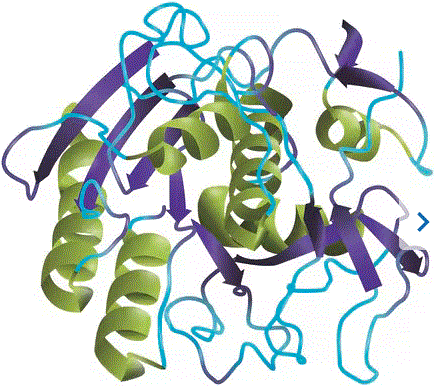
Proteinase K is a serine protease enzyme widely used in molecular biology and biochemistry for the digestion of proteins. Its molecular weight is approximately 28.9 kDa, and it is typically obtained as a lyophilized powder that is soluble in aqueous buffers. Proteinase K is highly stable and active over a broad range of temperatures (20–60°C) and pH values (pH 4–12), and it remains active in the presence of detergents, urea, and ionic denaturants, making it a robust tool for protein degradation.
The discovery of Proteinase K occurred in the 1970s from the fungus *Tritirachium album* and was characterized for its broad substrate specificity and thermostability. It was found to cleave peptide bonds adjacent to the carboxyl group of aliphatic and aromatic amino acids, which made it particularly useful for digesting denatured proteins. Its activity is enhanced by calcium ions, which stabilize the enzyme’s structure, and it is less sensitive to common protease inhibitors than many other proteases.
Proteinase K is typically produced via fermentation of the *Tritirachium album* culture, followed by purification steps such as ammonium sulfate precipitation and chromatography to remove contaminants and isolate the active enzyme. The purified enzyme is then lyophilized to yield a stable, long-lasting preparation. Recombinant expression systems have also been developed to produce Proteinase K with consistent activity and purity for research and industrial applications.
Chemically, Proteinase K is a serine protease, meaning it contains a serine residue in its active site that plays a central role in the hydrolysis of peptide bonds. Its broad specificity allows it to cleave a wide variety of proteins, including those that are denatured or tightly folded. This property distinguishes it from other proteases, which may require specific recognition sequences or native protein conformations. Proteinase K’s stability under denaturing conditions enables it to digest proteins in the presence of SDS, urea, or guanidine hydrochloride, which is critical in nucleic acid purification protocols.
In practical applications, Proteinase K is primarily used in molecular biology to remove proteins from nucleic acid preparations, ensuring high-purity DNA or RNA for downstream applications such as PCR, cloning, and sequencing. It is also employed in the preparation of genomic DNA from tissues, cells, and microorganisms, as well as in the degradation of nucleases that could otherwise degrade nucleic acids. In addition, Proteinase K is used in proteomics research to generate peptide fragments for mass spectrometry and in food or pharmaceutical industries to process protein-containing materials.
Physically, Proteinase K is stable when stored as a lyophilized powder at −20°C and remains active for extended periods in aqueous buffer when supplemented with stabilizers such as calcium ions. Care should be taken to avoid repeated freeze-thaw cycles, which can reduce enzymatic activity. It is important to handle Proteinase K with gloves and protective clothing, as proteolytic enzymes can cause irritation to the skin, eyes, and respiratory system.
Overall, Proteinase K is a highly versatile and robust serine protease. Its broad substrate specificity, stability under denaturing conditions, and ability to function in diverse buffers make it a cornerstone reagent in molecular biology and biochemistry. The enzyme’s unique combination of chemical and physical properties enables efficient protein degradation, making it indispensable for nucleic acid purification, proteomic studies, and industrial applications where protein hydrolysis is required.
|





 GHS07;GHS08 Danger Details
 Discovory and Applicatios